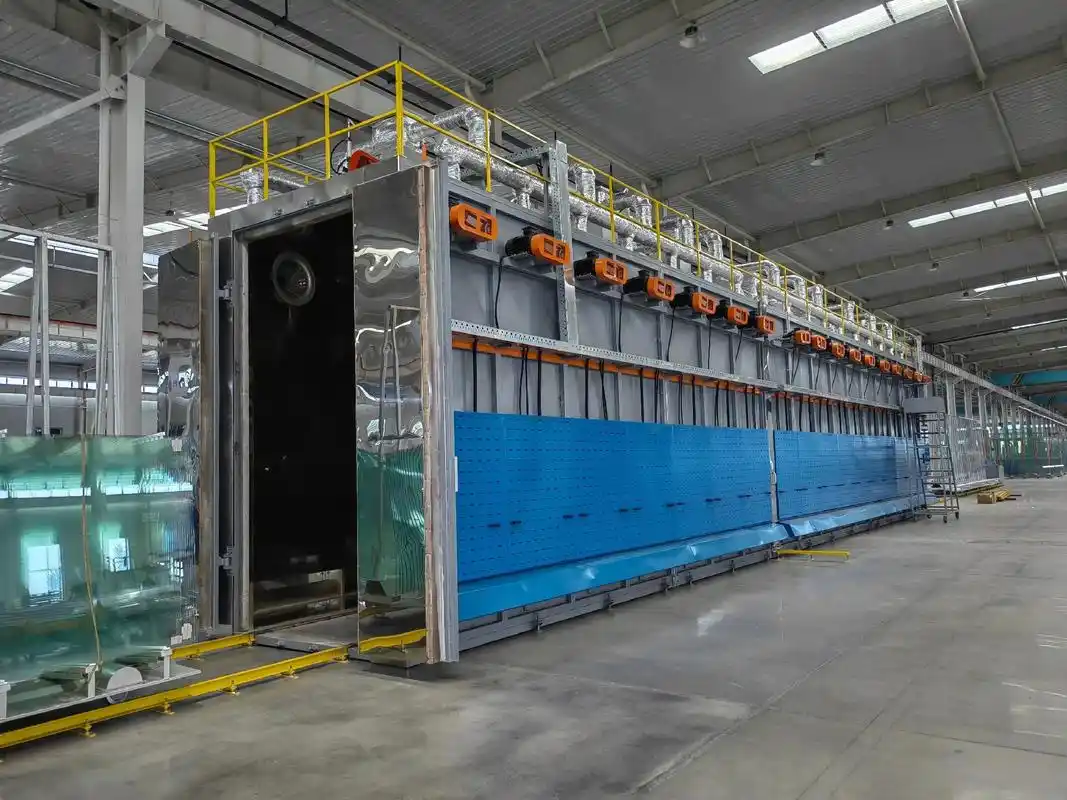
Heat Soak Glass for Critical Architectural Safety Glazing
Heat Soak Glass refers to tempered safety glass that has undergone an additional Heat Soak Test to reduce the risk of spontaneous breakage caused by nickel sulfide inclusions. While no process can eliminate this risk completely, Heat Soak Glass is widely specified for critical architectural projects where long-term reliability matters.
Heat Soak Glass Is a Glass Type, Not Just a Factory Process
In Glass Processing, Heat Soak Testing explains how the test is performed. In Glass Types, Heat Soak Glass explains why architects, facade consultants, and project buyers specify this glass for safety-critical areas such as curtain walls, skylights, canopies, high-rise facades, and public buildings.
Why Does Tempered Glass Sometimes Break Spontaneously?
Understanding nickel sulfide inclusions helps buyers understand why Heat Soak Glass is specified for critical projects.
Spontaneous Breakage Is Not Unique to Any Country or Manufacturer
Nickel sulfide inclusions are a rare natural risk associated with tempered glass worldwide. Heat Soak Testing is used to significantly reduce this risk by identifying many potentially problematic panels before they are delivered and installed.
How Heat Soak Glass Reduces Risk
After tempering, glass is placed in a heat soak chamber and exposed to elevated temperature under controlled conditions. Panels containing critical nickel sulfide inclusions are more likely to break during the test instead of after installation. Only surviving panels continue to inspection, packing, and delivery.
What Heat Soak Glass Does — and Does Not Do
This distinction is important for architects, building owners, and procurement teams.
| Claim | Answer | Explanation |
|---|---|---|
| Reduce spontaneous breakage risk | ✓ Yes | Heat soak testing significantly reduces the risk caused by critical NiS inclusions. |
| Provide additional quality assurance | ✓ Yes | It adds another inspection layer after tempering. |
| Improve long-term reliability | ✓ Yes | Especially useful for critical architectural glazing. |
| Make glass stronger | ✕ No | Heat soak testing does not increase the strength of tempered glass. |
| Make glass unbreakable | ✕ No | Glass can still break due to impact, edge damage, installation stress, or other causes. |
| Eliminate NiS risk completely | ✕ No | No process can guarantee complete elimination of spontaneous breakage risk. |
Technical Specifications
| Specification | Details |
|---|---|
| Base Glass | Tempered Glass |
| Heat Soak Test | EN 14179 Available |
| Available Thickness | 4mm – 19mm |
| Maximum Size | Up to 3300 × 13000 mm |
| Safety Glass | Yes |
| Best For | Curtain walls, facades, skylights, and high-rise buildings |
Need-to-Know
| Need | Answer |
|---|---|
| Reduce spontaneous breakage risk? | ✓ Yes |
| Eliminate spontaneous breakage completely? | ✕ No |
| Safety glass? | ✓ Yes |
| Suitable for curtain walls? | ✓ Highly recommended |
| Suitable for skylights? | ✓ Yes |
| Based on tempered glass? | ✓ Yes |
When Should Heat Soak Glass Be Specified?
Not every project requires heat soak glass, but it is strongly recommended when breakage consequences are high.
| Application | Recommendation | Reason |
|---|---|---|
| Residential shower doors | Usually optional | Lower replacement and public safety risk |
| Ground-floor storefronts | Optional / project dependent | Risk level depends on location and design |
| Curtain walls | Highly recommended | Large installed area and higher replacement cost |
| High-rise buildings | Highly recommended | Falling glass risk and difficult replacement |
| Skylights and overhead glazing | Highly recommended | Safety-critical position above people |
| Glass canopies | Highly recommended | Public areas and overhead exposure |
| Landmark buildings | Recommended | Owner confidence and long-term reliability |
| Public buildings | Recommended | Higher safety and liability expectations |
Typical Applications
Heat soak glass is most valuable in critical architectural applications where reliability, safety, and replacement cost matter.
Heat Soak Glass vs Standard Tempered Glass
Both are safety glass. Heat soak glass simply adds another quality assurance step to reduce spontaneous breakage risk.
| Feature | Standard Tempered Glass | Heat Soak Glass |
|---|---|---|
| Safety Glass | ✓ Yes | ✓ Yes |
| Strength | High | High |
| Heat Soak Tested | ✕ No | ✓ Yes |
| Reduced NiS Breakage Risk | Standard | Improved |
| Additional QA | Standard inspection | Post-tempering heat soak process |
| Lead Time | Shorter | Slightly longer |
| Cost | Lower | Higher due to extra process |
| Critical Architectural Applications | Good | Excellent |
Why Architects Choose Heat Soak Glass
Architects, facade consultants, and building owners specify Heat Soak Glass when the cost of unexpected breakage is high. It helps reduce maintenance risk, replacement cost, public safety concerns, and long-term owner uncertainty.
Frequently Asked Questions
What is a Heat Soak Test?
A Heat Soak Test subjects tempered glass to elevated temperatures for a controlled period to identify panels containing critical nickel sulfide inclusions that could cause spontaneous breakage.
Does heat soak testing guarantee no breakage?
No. Heat soak testing significantly reduces the risk of spontaneous breakage but cannot completely eliminate it.
Is heat soak glass stronger?
No. Heat soak testing does not increase glass strength. It is an additional quality assurance process applied to tempered glass.
Is heat soak glass more expensive?
Yes. It usually costs more than standard tempered glass because it requires additional testing time, handling, inspection, and production control.
When is Heat Soak Glass required?
It is often required by architects, facade consultants, or project specifications for curtain walls, high-rise buildings, skylights, canopies, and other critical glazing.
What happens if glass breaks during testing?
If a panel breaks during the heat soak process, it is removed and reproduced according to the project requirement before shipment.
Why Buy Heat Soak Glass From CN Glass Pro?
Reliable heat soak glass starts with correct tempering, careful processing, and complete export control.
Correct Tempering First
Heat soak testing is only meaningful when the base tempered glass is properly processed and inspected.
Additional Quality Control
We focus on dimensional accuracy, edge quality, flatness, optical appearance, and inspection before packing.
Export Project Support
We support large architectural glass orders with packaging, documentation, communication, and global delivery experience.
Related Glass Types & Processing
Need Heat Soak Glass for Your Project?
Send us your drawings, glass type, thickness, size, quantity, project location, application, required standard, and destination port. We will help you confirm whether Heat Soak Glass is necessary based on project risk, safety requirements, cost, and long-term reliability.